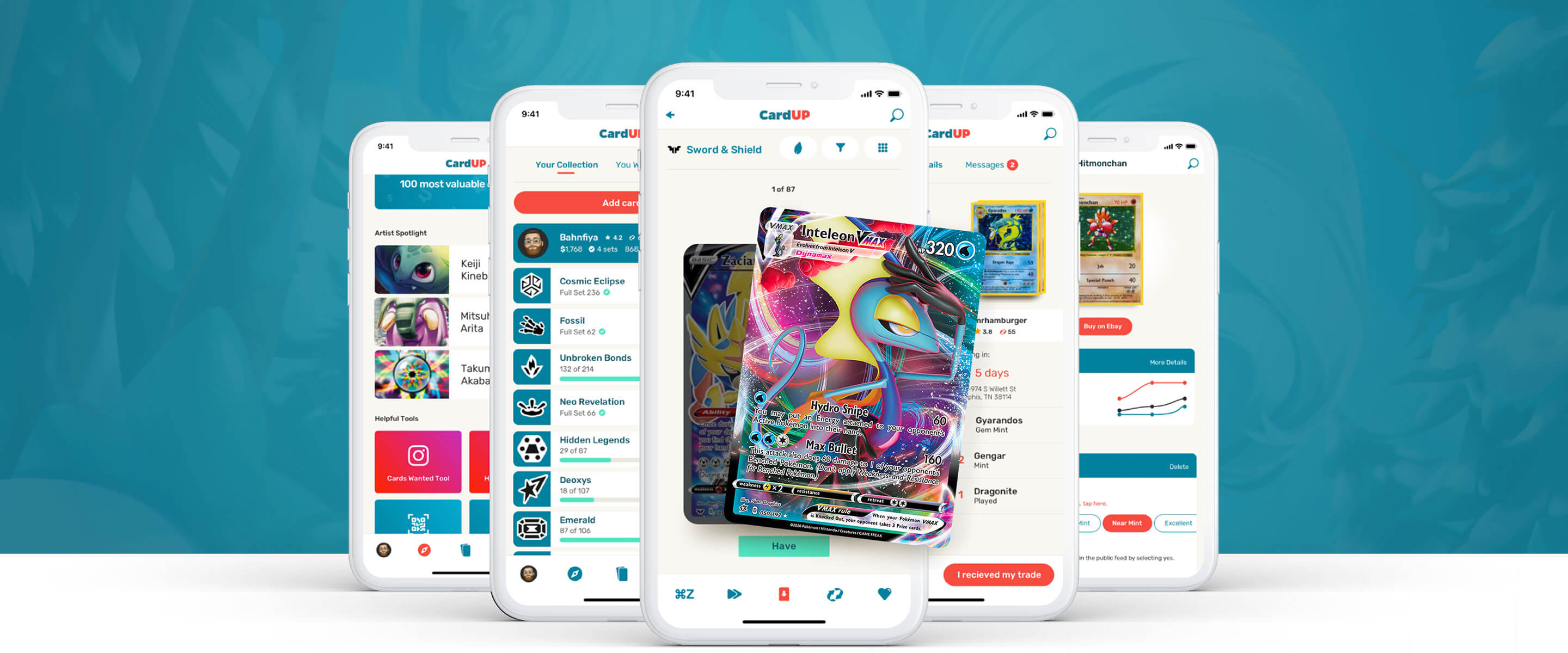
Your Pokémon card collection’s new home.
Overview
A passion project with Caleb Nance, one of my favorite developers to build with. Pokémon collectors today trade on Instagram threads and Reddit posts, hoping the stranger on the other end isn’t running a scam. We saw the gap and built the app the community didn’t have. Two-person team. I owned the design end to end.
Opportunity
Become the primary destination for Pokémon card collectors to organize, track, and trade their physical cards with others.
Research & Discovery
The most common way for collectors to trade today are by posting on Instagram and Reddit. Common pain points include:
- 🤯 getting people to see my cards
- 😬 trading with strangers
- 👺 getting scammed
As we dug deep into how the community trades today, we uncovered another need from the collectors perspective, tracking and organization. Most collectors use binders with plastic sleeves to store their cards while expensive cards are kept in protective cases. There are a few apps where you can organize and track your collection yet they all have similar pitfalls:
- 😩 low quality Graphical User Interfaces
- 😱 missing access to cards previously released
- 🥴 high manual level of effort
- ☹️ lack of community and sharing your hobby
Guiding Principles
I set four principles up front. Every exploration had to meet them before it left my screen:
- Reduce Effort
- Use technology to automate actions the user would have to otherwise perform
- Transparency
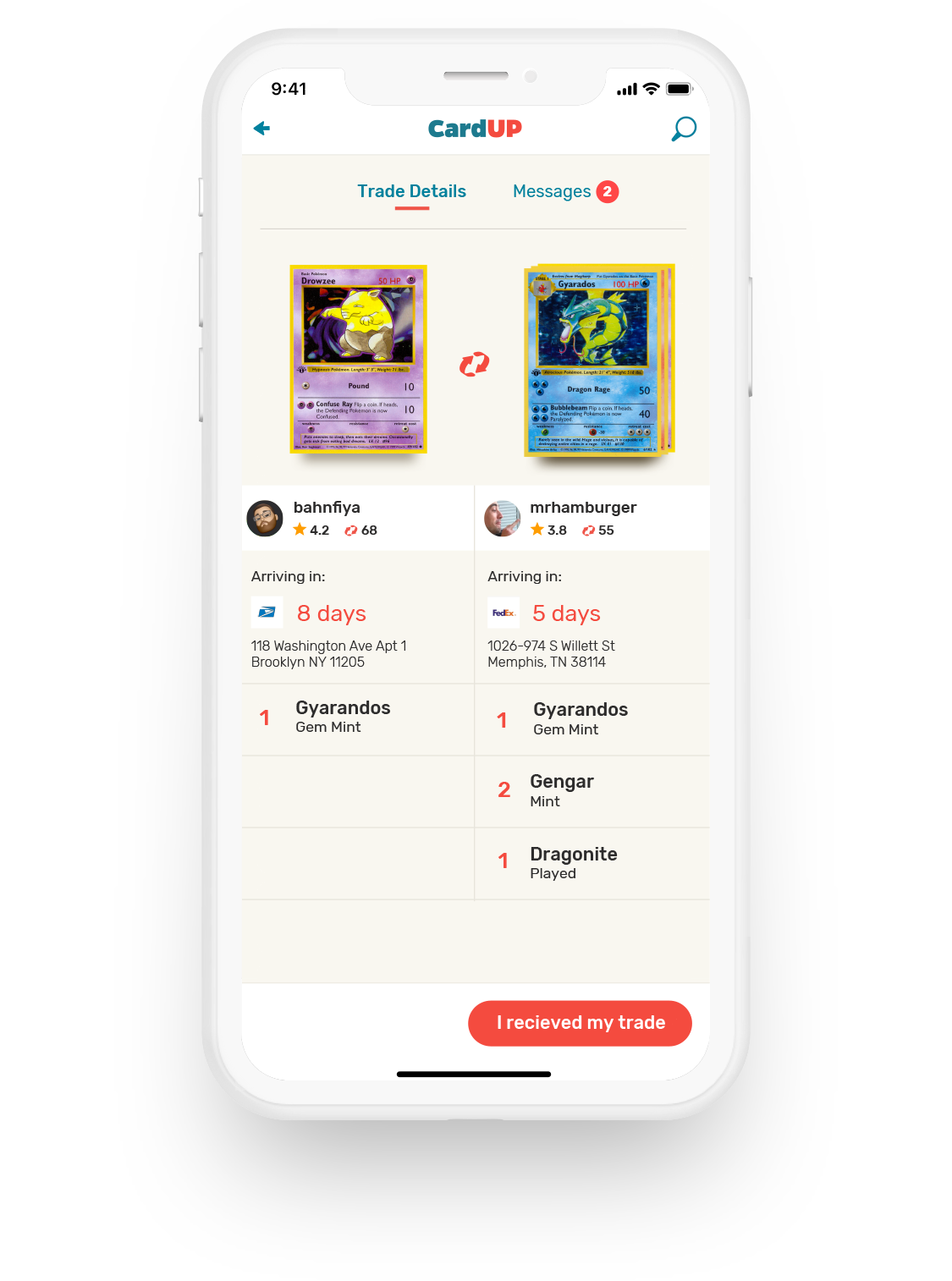
- Show information that will help users feel comfortable trading with others
- Community Built
- Provide a sense of belonging and assistance to further the goals of our users
- Intrinsic Value
- Ensure deep value is created with every feature
It’s difficult to understand the value you’re providing no matter how well intentioned your solutions may be if not grounded in research and understanding.
Fill the void
Discovery done, the work moved to structure. The product needed to answer five opportunities, so I built the IA around five top-level sections, each one mapped to a specific user need:
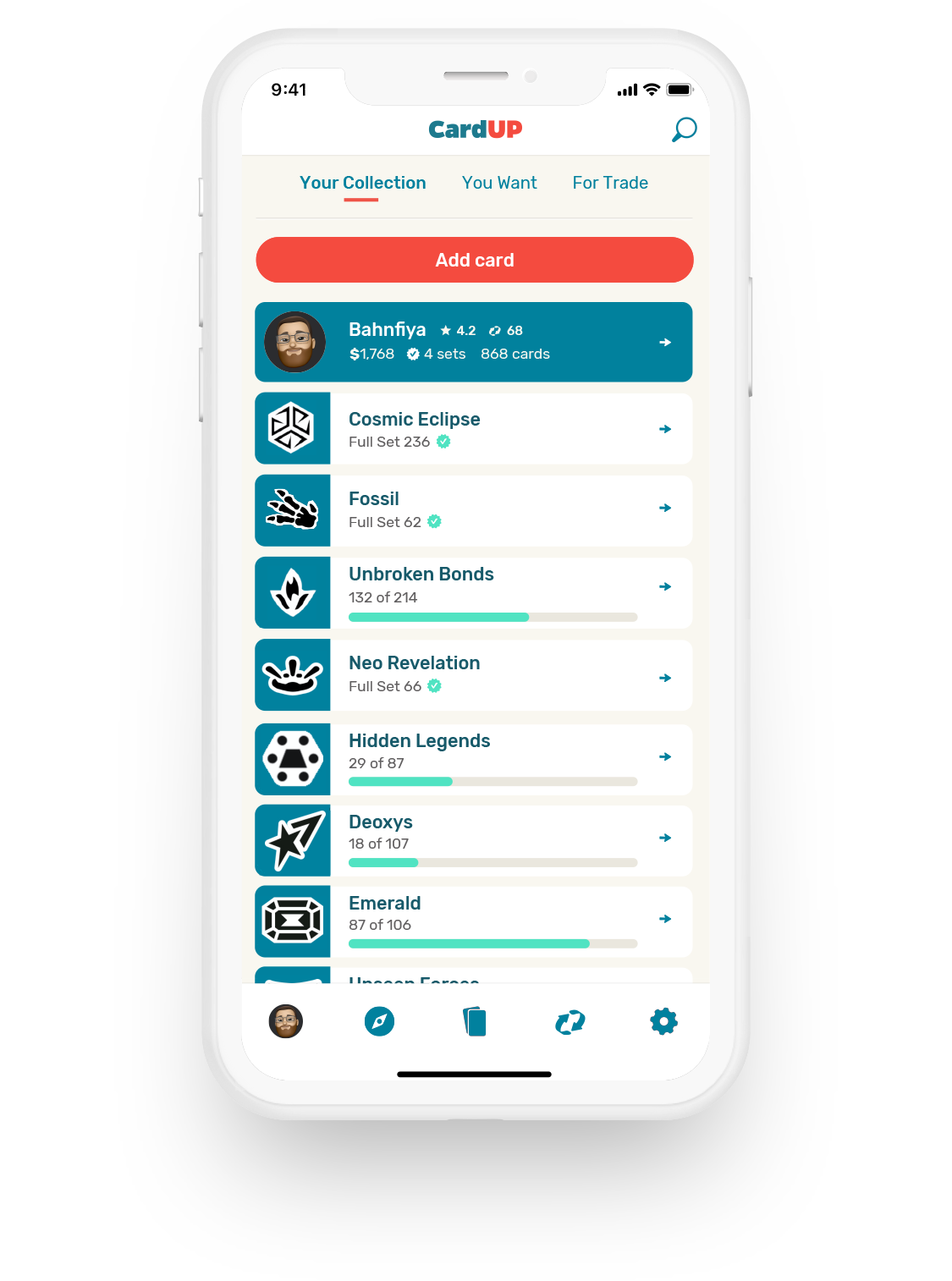
- Collection
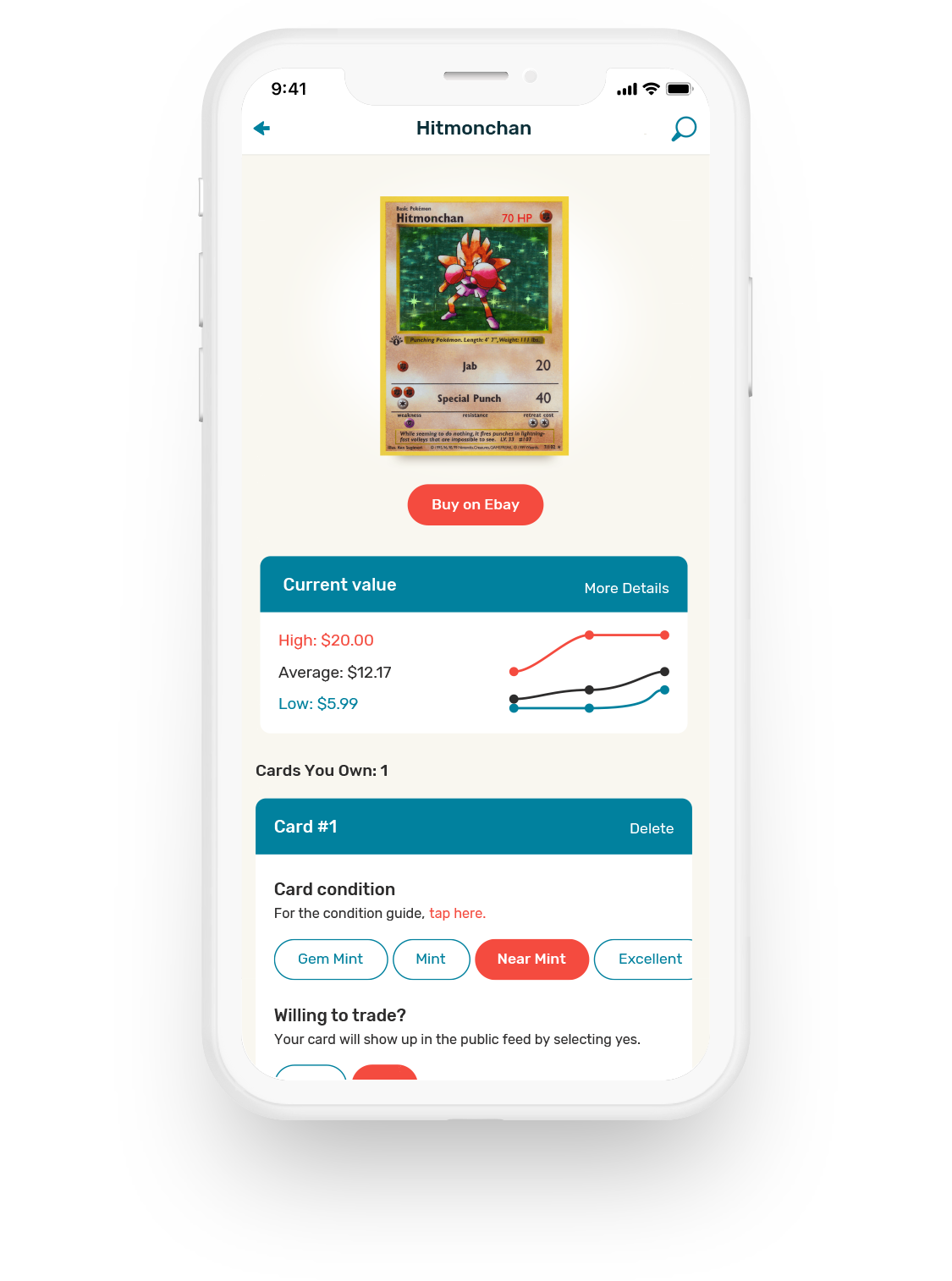
- Add and track the cards you own
- Engagement
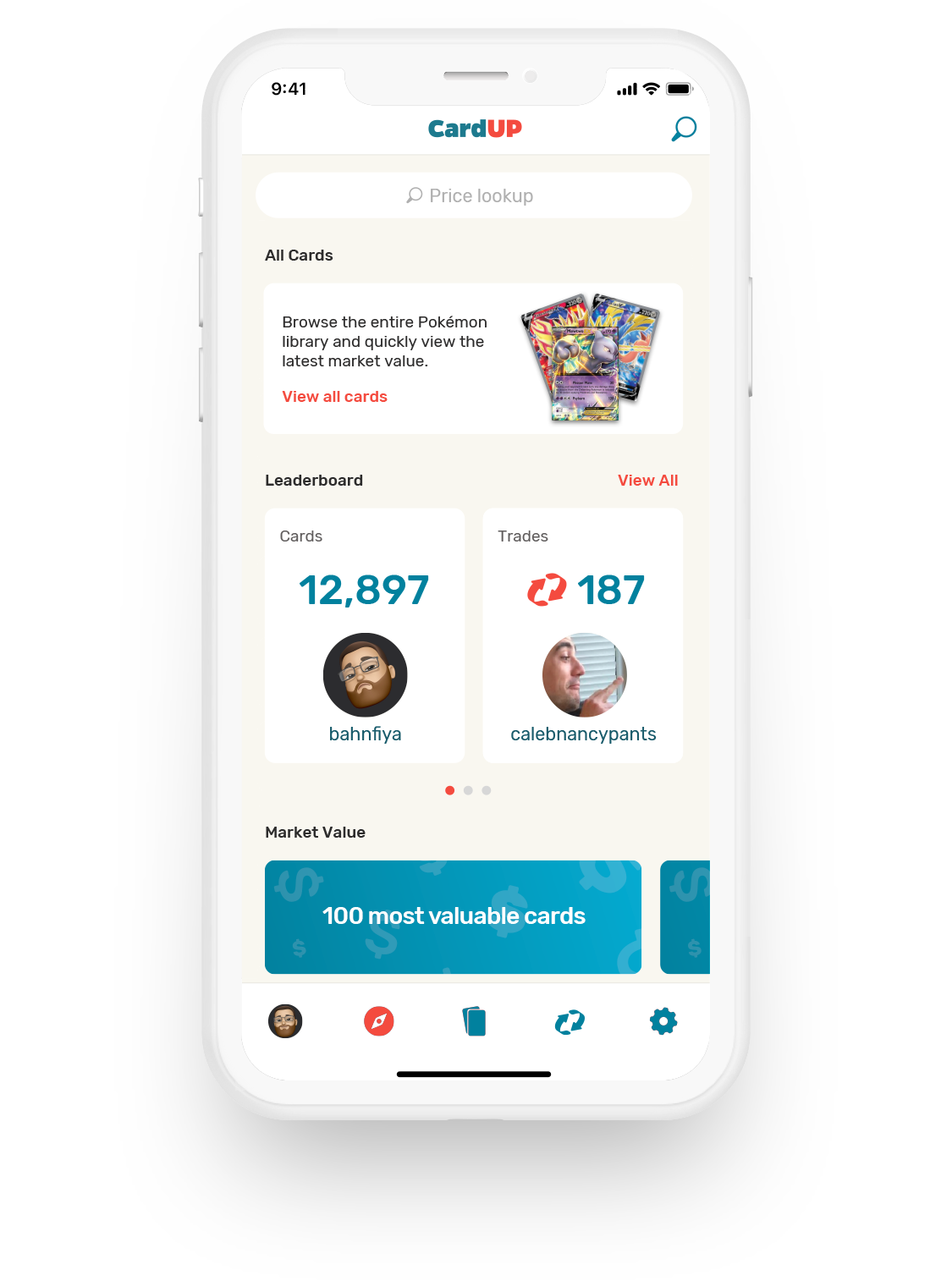
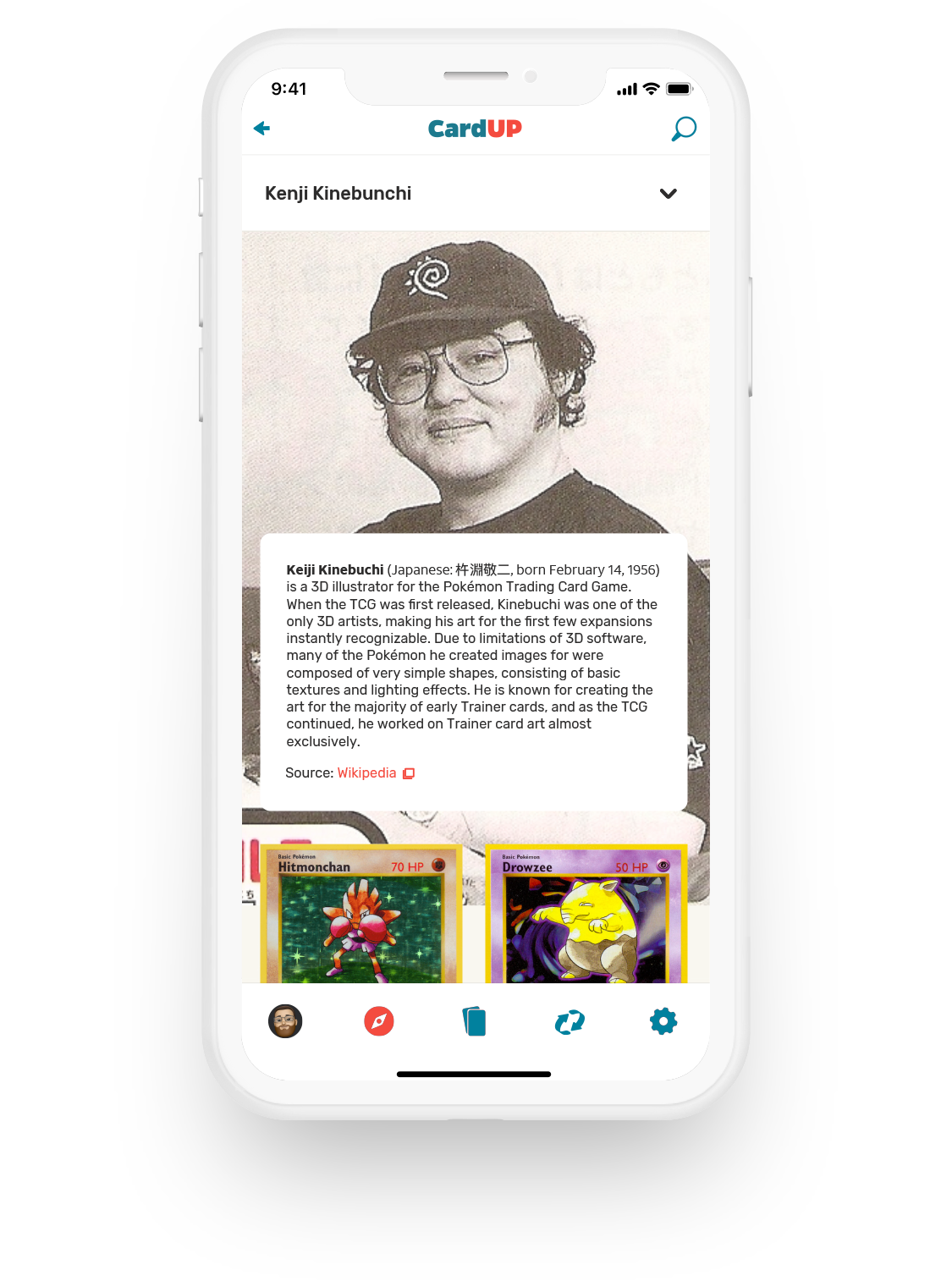
- Provide useful and entertaining Pokémon content
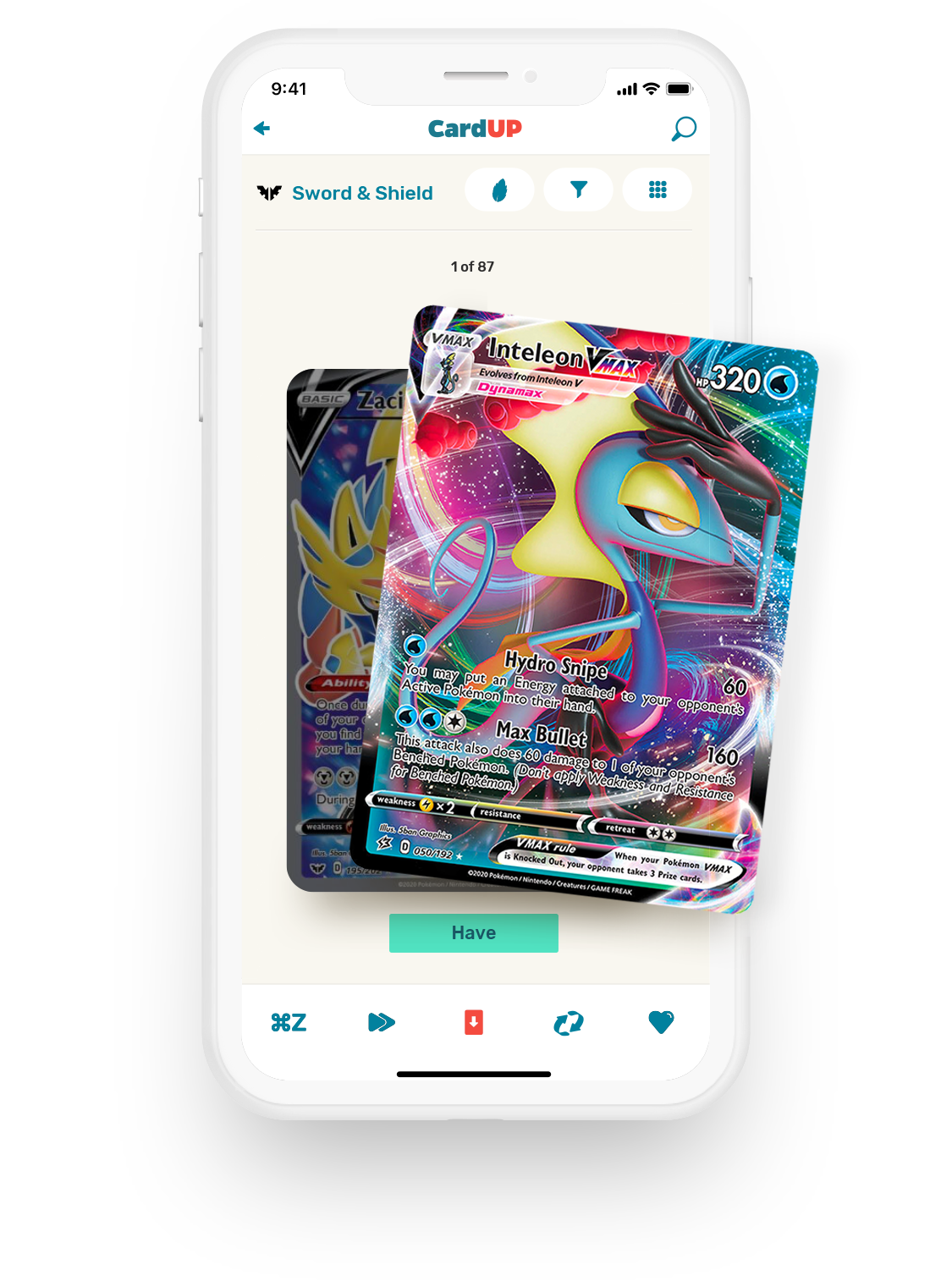
- Marketplace
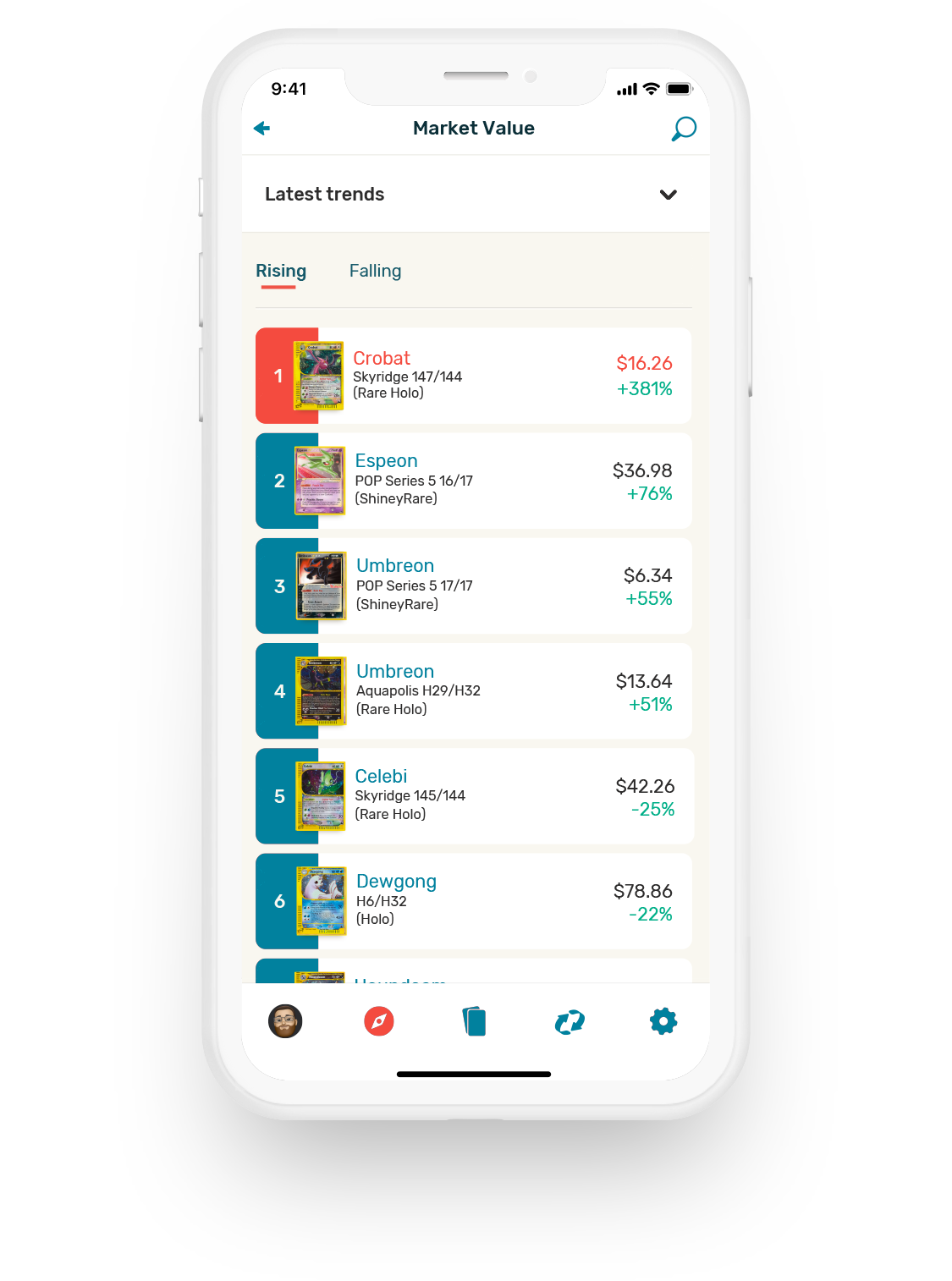
- Available cards people are willing to trade
- Trades
- Full feature trade management platform
- Personalization
- Customize the app to meet your needs
Magic Moment
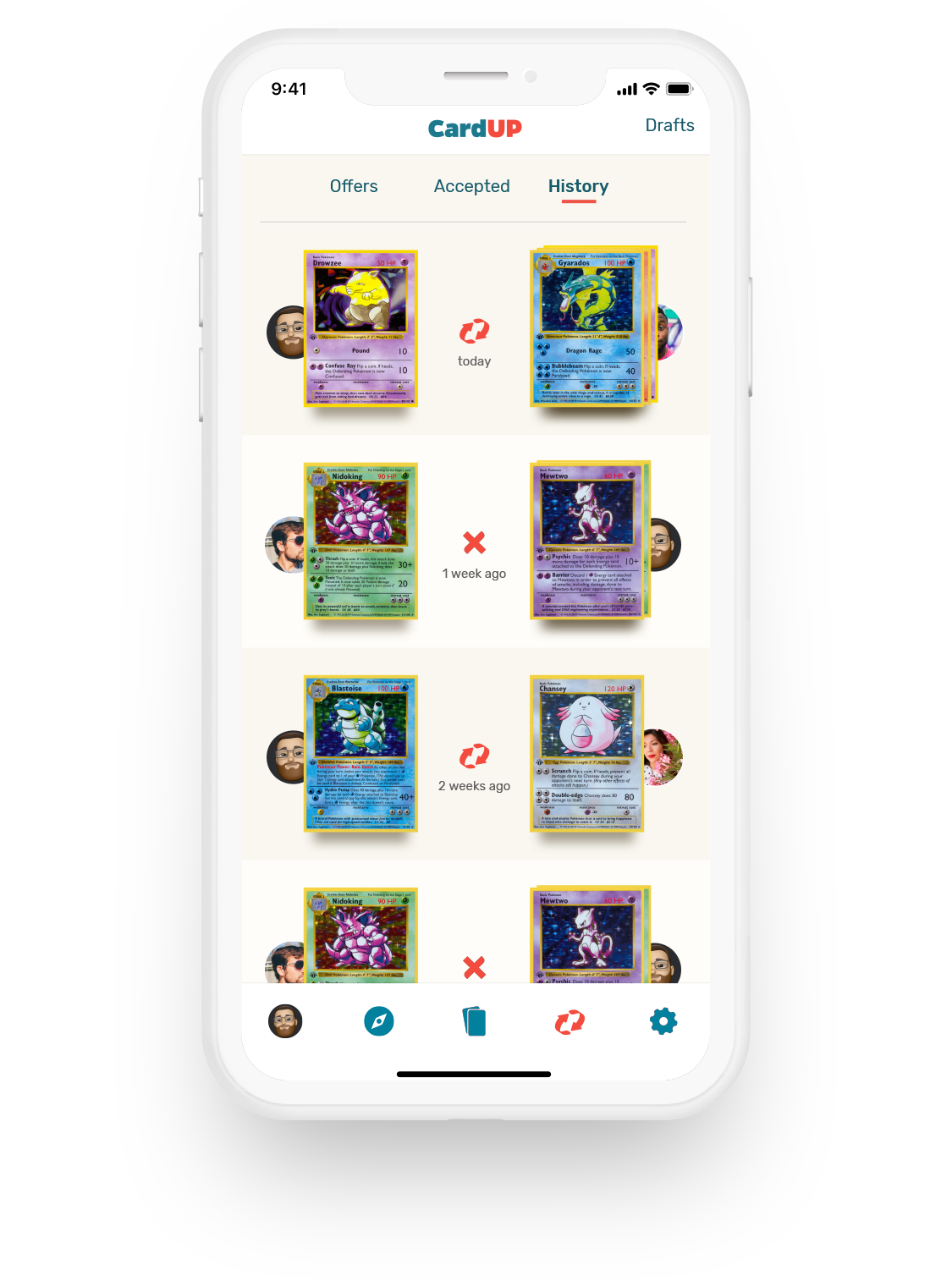
Auto-matching was the design decision the whole product hinged on. Most trading apps make you do the work: search, match, message, negotiate. I wanted the inverse: tell us your collection once, and the app brings trades to you. Matches are scored on availability, market value, and a little secret sauce tossed in. Approve as-is, or edit the trade to your taste.